

Maple Grove Stone Shelters - Solstice Design Studio
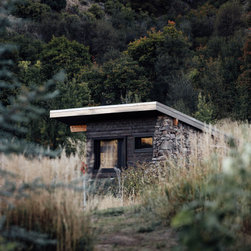
The Stone Shelters were the first new structures to be created as part of a long term vision of sustainable, thoughtful and minimal development at the Maple Grove Hot Springs & Resort. They were designed to replace canvas yurts in the same corner of the property - permanent dwellings crafted to endure for generations, completely off-grid and powered, like the rest of the property and its compound of structures, by a small solar array and a natural geothermal spring.
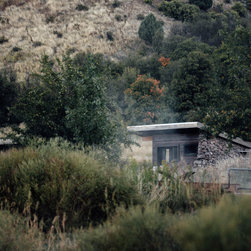
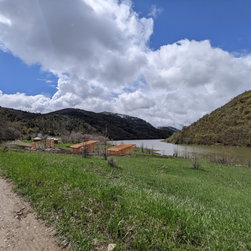
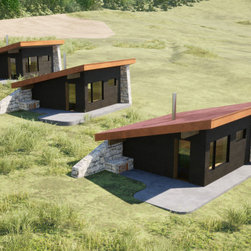
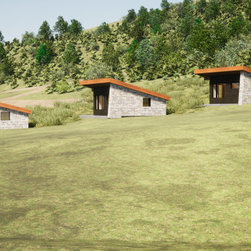
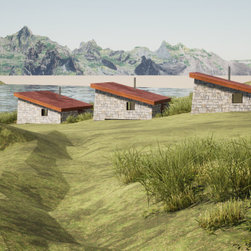
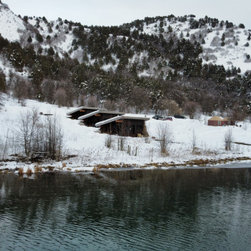
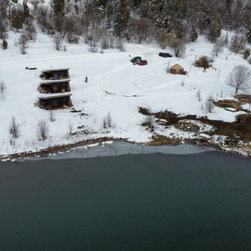
The project was a collaborative effort between a number of building and design professionals. Solstice led the architectural design, zoning approvals and permitting of the project. Our team envisioned a series of replicable, small structures tucked into the sloping earth, mostly hidden from the hillside above while opening up to magnificent views of the river. Visitors can retreat to the comfort of a shelter and emerge to the communal hot springs just steps away as they please. Birds of prey and jumping fish are common sights from the doorstep of each unit.
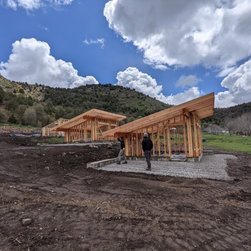
Local materials and regional expertise were foundational to this project. The primary building material - granite stones - were hauled from within a hundred yards or so of the building sites. Builders and craftsmen skilled in passive building techniques, timber framing and lime plaster were tapped to guide the construction, while the bulk of labor-hours were contributed by volunteers.
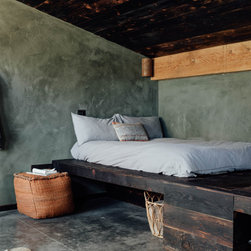
The design and construction of these shelters lean heavily on passive design, thermal mass, low carbon building materials and air-tight, super-insulated construction to ensure that they outlive everyone who participated in their realization as comfortable, enduring refuges. Originally designed to be built with hempcrete - a hemp-lime insulation that could be mixed and applied on site - the project pivoted to a double-stud wall filled with recycled cellulose and wrapped in a reinforced, vapor-open water-resistive barrier to further reduce its carbon footprint, cost and labor input. Every decision was driven by the context of this endeavor and meticulously planned by the project team to balance ecological footprint, building performance and durability, human comfort, constructability and cost.
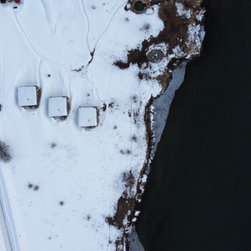
The vision and execution of the shelters continued to evolve through construction and each of the three shelters bear their own unique marks, shaped by the dozens of groups and individuals involved in the process.
The project was a collaborative effort between a number of building and design professionals. Solstice led the architectural design, zoning approvals and permitting of the project. Our team envisioned a series of replicable, small structures tucked into the sloping earth, mostly hidden from the hillside above while opening up to magnificent views of the river. Visitors can retreat to the comfort of a shelter and emerge to the communal hot springs just steps away as they please. Birds of prey and jumping fish are common sights from the doorstep of each unit.
Local materials and regional expertise were foundational to this project. The primary building material - granite stones - were hauled from within a hundred yards or so of the building sites. Builders and craftsmen skilled in passive building techniques, timber framing and lime plaster were tapped to guide the construction, while the bulk of labor-hours were contributed by volunteers.
The design and construction of these shelters lean heavily on passive design, thermal mass, low carbon building materials and air-tight, super-insulated construction to ensure that they outlive everyone who participated in their realization as comfortable, enduring refuges. Originally designed to be built with hempcrete - a hemp-lime insulation that could be mixed and applied on site - the project pivoted to a double-stud wall filled with recycled cellulose and wrapped in a reinforced, vapor-open water-resistive barrier to further reduce its carbon footprint, cost and labor input. Every decision was driven by the context of this endeavor and meticulously planned by the project team to balance ecological footprint, building performance and durability, human comfort, constructability and cost.
The vision and execution of the shelters continued to evolve through construction and each of the three shelters bear their own unique marks, shaped by the dozens of groups and individuals involved in the process.
Project Year: 2022
Project Cost: $100,001 - $150,000
Country: United States
Zip Code: 83283