
California Hilltop
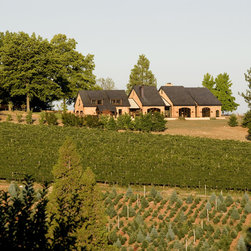
This semi-recycled California home was completed in 2005. The owners have lived on the site since they built their first home there in 1974. While they loved their location they did not think it reasonable to tear down a relatively new home—a home they built themselves. The original house was dark and took little advantage of the spectacular site. With the first house gone (it was almost completely recycled, with most of the structural members reused in the new house) a truly remarkable site was revealed with magnificent views over vineyards and valleys and to the Sierras beyond. Rather than build in the same footprint we moved this house down off the crown of the hill to nestle it into the site more and to help embrace its location on a curving slope.
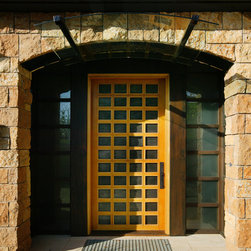
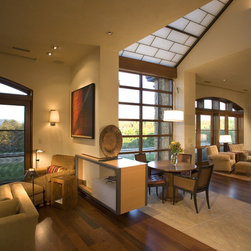
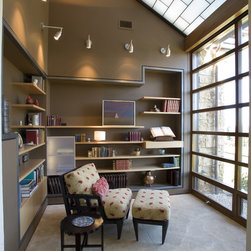
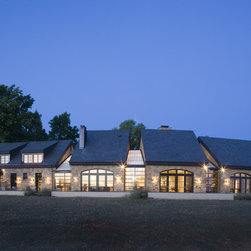
One significant design challenge was to create naturally lit spaces but to manage the intense summer heat as much as possible. The design fans out toward the view with each segment providing a separate space/function but at the same time an overall design intent of openness and light. Another significant challenge was that one of the couple wanted a house reminiscent of French farm houses and the other wanted a sharply contemporary home. On the exterior local stone was used with slate roofs, giving the house mass and a very solid, permanent feeling (the owners intend this house to last for generations). The interstitial spaces (the wedges) contrast with the primary forms both in lightness and in geometry to create spaces that are light and airy, crisp and clean. A Kalwal system was used for the ceiling in those spaces, which provides natural translucent light, a “weightless” quality and a good insulation value (as skylights in this climate were not practical).
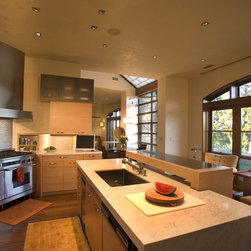
The program is laid out so that the house functions with consideration of pattern of the sun. The spaces which could work with the afternoon heat—entry, butler’s pantry, laundry, dining room and an office—are all on the west side of the house. The master bedroom, the living area, the library, the breakfast nook, and the kitchen are all on the view/east side of the house which can warm in the morning but be protected in the afternoon.
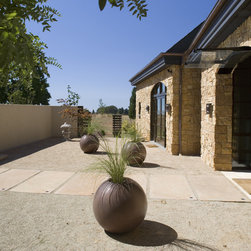
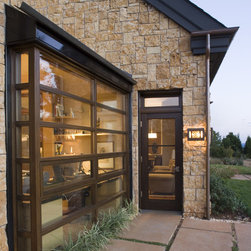
Consistent detailing emphasizing the concept of light vs. mass is taken throughout the house. Each element of the design is worked out with the concept of the house, contrasting heavy and solid with light and airy. The dining room opens to a courtyard on the east side of the house with the sound of the water feature beyond. The entry experience is framed by stucco walls and steel “fences” that funnel people into the space and experience from outside to inside. It becomes a nestled protective space one passes through from the open hillside to the security of the home. On the view side of the house, the landscaping is punctuated by low walls and scattered patios that allow views outward and also create gathering spaces for outdoor eating and entertaining. The house is able to be “closed up” in the summer with hidden retractable shades.
This house uses the site to create sweeping views and light spaces, each unique but integrated together through careful attention to detail and natural materials. The spaces meld into one another with ease, and the details reflect that ease and serenity.
One significant design challenge was to create naturally lit spaces but to manage the intense summer heat as much as possible. The design fans out toward the view with each segment providing a separate space/function but at the same time an overall design intent of openness and light. Another significant challenge was that one of the couple wanted a house reminiscent of French farm houses and the other wanted a sharply contemporary home. On the exterior local stone was used with slate roofs, giving the house mass and a very solid, permanent feeling (the owners intend this house to last for generations). The interstitial spaces (the wedges) contrast with the primary forms both in lightness and in geometry to create spaces that are light and airy, crisp and clean. A Kalwal system was used for the ceiling in those spaces, which provides natural translucent light, a “weightless” quality and a good insulation value (as skylights in this climate were not practical).
The program is laid out so that the house functions with consideration of pattern of the sun. The spaces which could work with the afternoon heat—entry, butler’s pantry, laundry, dining room and an office—are all on the west side of the house. The master bedroom, the living area, the library, the breakfast nook, and the kitchen are all on the view/east side of the house which can warm in the morning but be protected in the afternoon.
Consistent detailing emphasizing the concept of light vs. mass is taken throughout the house. Each element of the design is worked out with the concept of the house, contrasting heavy and solid with light and airy. The dining room opens to a courtyard on the east side of the house with the sound of the water feature beyond. The entry experience is framed by stucco walls and steel “fences” that funnel people into the space and experience from outside to inside. It becomes a nestled protective space one passes through from the open hillside to the security of the home. On the view side of the house, the landscaping is punctuated by low walls and scattered patios that allow views outward and also create gathering spaces for outdoor eating and entertaining. The house is able to be “closed up” in the summer with hidden retractable shades.
This house uses the site to create sweeping views and light spaces, each unique but integrated together through careful attention to detail and natural materials. The spaces meld into one another with ease, and the details reflect that ease and serenity.
Project Year: 2005
Country: United States
Zip Code: 95667