
Japanese Inspired Post & Beam
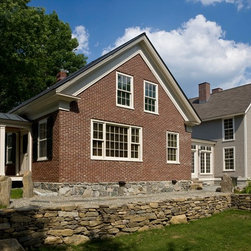
The owners’ program was to expand their 1845 brick cape to provide a contemporary residence that enhanced their enjoyment of the property and showcased their dual enthusiasms for Vermont and traditional Japanese design and craft.
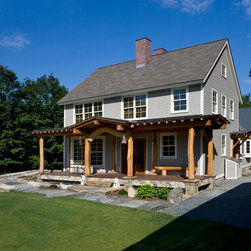
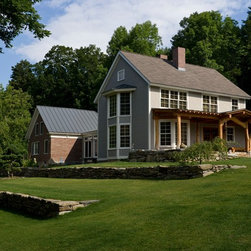
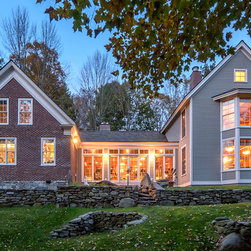
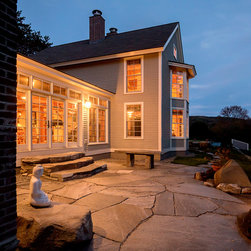
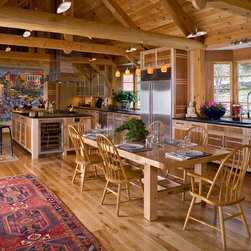
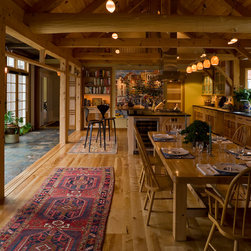
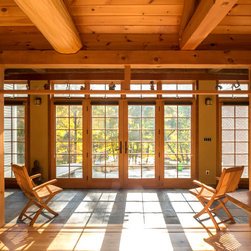
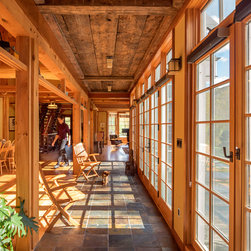
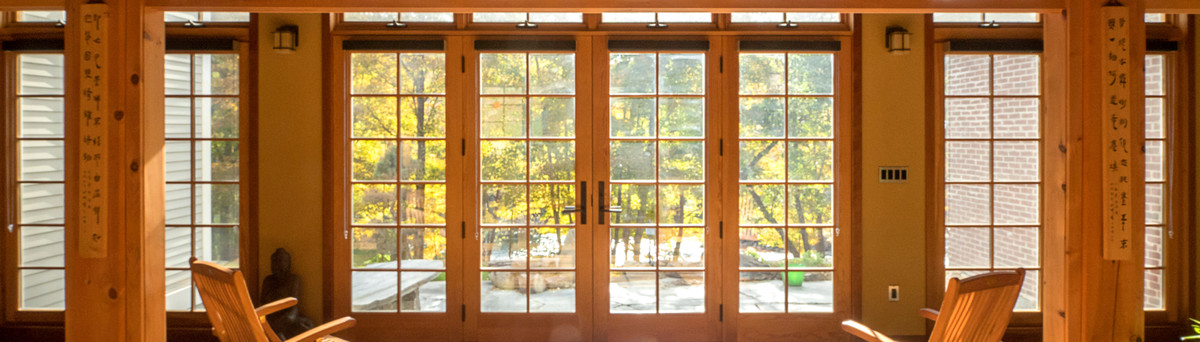
The original house was built close to the road with restricted views of the surrounding valley. The additions follow the line of the riverside terrace site. The massing adapted traditional farmhouse forms of ell and barn and the exterior reflected the character of the original cape. The interior unites traditional New England timber framing, Japanese influenced detailing and contemporary space planning to connect the new living spaces to views of the river and valley. The open kitchen dining space can be shielded by shoji screens from the sunny, tiled indoor/outdoor “engawa” area which leads through large windows and glass doors to a south facing terrace overlooking the river.
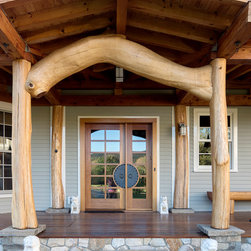
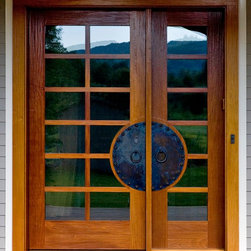
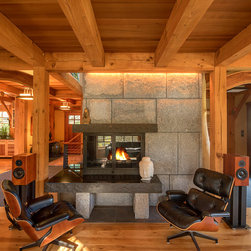
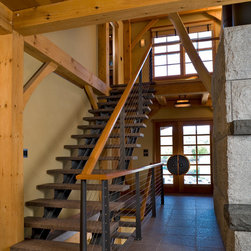
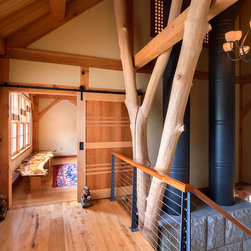
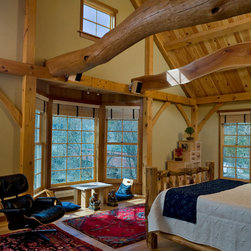
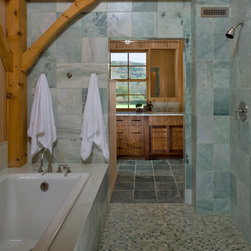
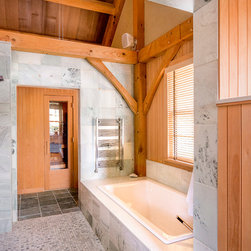
Peeled logs with distinctive shapes were harvested on the property to provide a contrast with the grid of the timber frame. Traditional Japanese techniques were reinterpreted in the cabinetry details using local wood species. Naturally finished wood and Japanese plaster unite the interiors in an overall warm tone. Local materials were used including many Vermont wood species, a hemlock timber frame, birch floors and Barre granite for the fireplace mass. The owners particularly enjoy how the spaces heighten their perception of the changing light through the day and the seasons.
The original house was built close to the road with restricted views of the surrounding valley. The additions follow the line of the riverside terrace site. The massing adapted traditional farmhouse forms of ell and barn and the exterior reflected the character of the original cape. The interior unites traditional New England timber framing, Japanese influenced detailing and contemporary space planning to connect the new living spaces to views of the river and valley. The open kitchen dining space can be shielded by shoji screens from the sunny, tiled indoor/outdoor “engawa” area which leads through large windows and glass doors to a south facing terrace overlooking the river.
Peeled logs with distinctive shapes were harvested on the property to provide a contrast with the grid of the timber frame. Traditional Japanese techniques were reinterpreted in the cabinetry details using local wood species. Naturally finished wood and Japanese plaster unite the interiors in an overall warm tone. Local materials were used including many Vermont wood species, a hemlock timber frame, birch floors and Barre granite for the fireplace mass. The owners particularly enjoy how the spaces heighten their perception of the changing light through the day and the seasons.
Project Year: 2010
Country: United States