

Jarratt Mid-Century Modern
This project earned a National NARI Contractor of the Year Award for Residential Addition $100,000–$250,0000 in 2010.
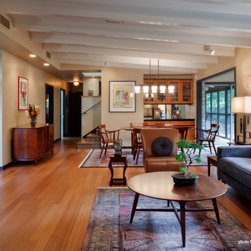
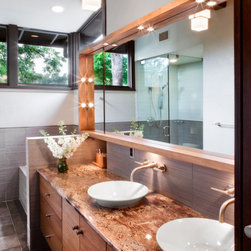
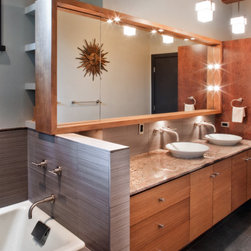
Additions and modifications to this postwar home greatly enhanced the functional area of the home, but did so in a manner that’s in keeping with the home’s original scale, materials, and aesthetics. Rather than opting to change the underlying characteristics of the existing home, it was decided early on to maintain its midcentury modern qualities and Japanese undertones.
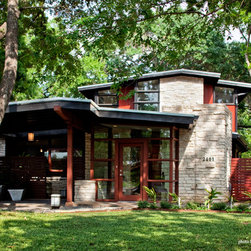
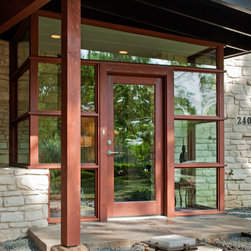
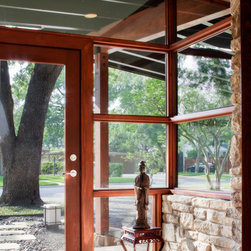
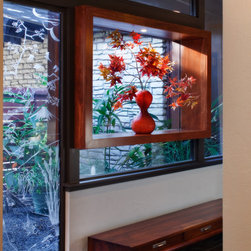
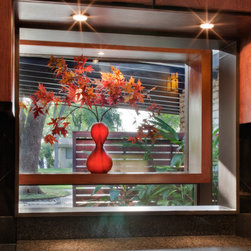
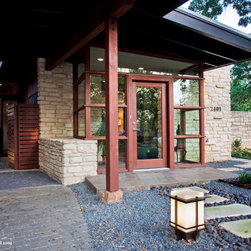
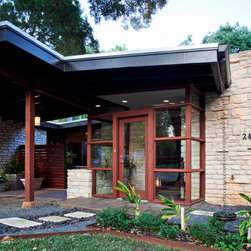
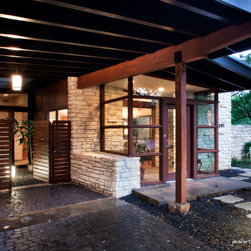
At the front of the house, a new glass entry vestibule was created in place of an older masonry fireplace. Bands of glass set within horizontal redwood frames enclose the new space, which was built in front of the original home’s existing stone façade. Rather than continuing to act as the home’s entry, the courtyard space has instead become a landscaped focal point visible from within the house. The wall separating the courtyard from the interior was completely rebuilt as an asymmetrical composition of glass, wood, and stone, whose primary design element, a redwood window box, “floats” above the low masonry wall. A similar opening in the existing kitchen now allows occupants there a view into the courtyard outside.
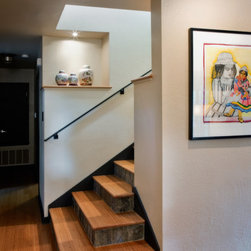
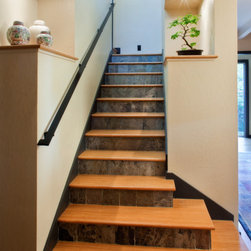
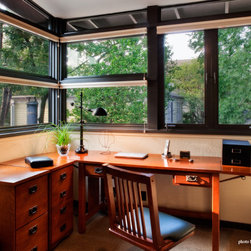
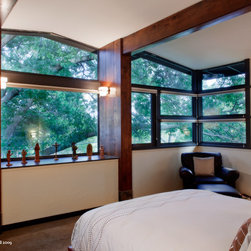
A new master bedroom suite and office on the second floor were connected to the house by a new stairway located between the existing dining room and a first floor bedroom modified into an in-law suite. The second floor was built on top of the existing roof to preserve the sloped ceilings on the first floor. The new Master Bedroom faces a downtown view through horizontal bands of windows and a larger window located at the foot of the bed. Second floor rooms were made to feel larger by locating windows at opposing corners of exterior walls; all windows were carefully designed to die into the underside of the ceiling. In keeping with the existing character of the home, strong horizontal lines, a low roof pitch, and exposed heavy wood beams were included in the addition.
The front entry modification and second story addition to this postwar home greatly enhanced the functional areas of the home, but did so in a manner that’s in keeping with the home’s original scale, materials, and aesthetics.
Additions and modifications to this postwar home greatly enhanced the functional area of the home, but did so in a manner that’s in keeping with the home’s original scale, materials, and aesthetics. Rather than opting to change the underlying characteristics of the existing home, it was decided early on to maintain its midcentury modern qualities and Japanese undertones.
At the front of the house, a new glass entry vestibule was created in place of an older masonry fireplace. Bands of glass set within horizontal redwood frames enclose the new space, which was built in front of the original home’s existing stone façade. Rather than continuing to act as the home’s entry, the courtyard space has instead become a landscaped focal point visible from within the house. The wall separating the courtyard from the interior was completely rebuilt as an asymmetrical composition of glass, wood, and stone, whose primary design element, a redwood window box, “floats” above the low masonry wall. A similar opening in the existing kitchen now allows occupants there a view into the courtyard outside.
A new master bedroom suite and office on the second floor were connected to the house by a new stairway located between the existing dining room and a first floor bedroom modified into an in-law suite. The second floor was built on top of the existing roof to preserve the sloped ceilings on the first floor. The new Master Bedroom faces a downtown view through horizontal bands of windows and a larger window located at the foot of the bed. Second floor rooms were made to feel larger by locating windows at opposing corners of exterior walls; all windows were carefully designed to die into the underside of the ceiling. In keeping with the existing character of the home, strong horizontal lines, a low roof pitch, and exposed heavy wood beams were included in the addition.
The front entry modification and second story addition to this postwar home greatly enhanced the functional areas of the home, but did so in a manner that’s in keeping with the home’s original scale, materials, and aesthetics.
Project Year: 2009
Country: United States
Zip Code: 78703