







how to get rid of yucca FOREVER?
the previous owners must have adored them, as there were lots and lots and lots. The first year, which was five years ago, i dug them all out.... i thought. the roots are the size of a man's calf, no kidding. so, apparently, i'm not getting it all. i, for the fifth year, dug them out. i'm sure i'm wasting my time. can i round up down in their hole or would it be better to wait for next year when they have leaves? (no getting snippy about the roundup, pleeeease!) i hate them. thanks
Comments (164)
 10 years agolast modified: 9 years ago
Boiling water to open the pores then a gallon of vinegar. Concentrated brush killer meant to be diluted in water, not diluted. Though I know many choose not use herbicides. But this sounds like war. I've not seen a thread this long. Ever.
- 10 years agolast modified: 9 years ago
As a follow-up to my post from Apr 15, 13...
The Herbicide "Remedy" seems to have WORKED!!! We mixed it with diesel fuel and administered it the way this website directed:
http://texnat.tamu.edu/about/brush-busters/yucca/Seriously - my yucca just laughed at roundup.
The "Remedy" wasn't cheep. I got it from Amazon and it was $100.00 a gallon but... IT WORKED! And you use a fairly small amount. That's a good thing because I'm ready - should any little new shoots show their ugly heads.
The main thing I found was - DO NOT DISTURB THE ROOTS OF THIS PLANT TILL YOU *KNOW* IT IS DEAD!!! Anywhere you nick the root - a new plant will shoot up. Now instead of 8 plants to get rid of - you could have 38.
I hope this helps someone trying to get rid of this thing. Here in Utah I see new plantings of it going in all over. I appreciate the efforts being made to conserve water but man, people just don't know what they're doing with these beasts.
Yucca's are the Parrots of the plant world. One investment WILL require a lifetime commitment. Haha
Good luck! I am sincerely hoping that this is the end of our five-year effort to kill the blasted Yucca!
0 Related Professionals
Wrentham Landscape Architects & Landscape Designers · Norton Shores Landscape Architects & Landscape Designers · Allentown Landscape Contractors · Woburn Landscape Contractors · Bainbridge Island Landscape Contractors · Bridgeview Landscape Contractors · Dunwoody Landscape Contractors · Fort Wayne Landscape Contractors · Fruit Heights Landscape Contractors · Gallatin Landscape Contractors · National City Landscape Contractors · North Lauderdale Landscape Contractors · Olympia Landscape Contractors · Shirley Landscape Contractors · Woodbury Landscape Contractors- 9 years ago
Hi, I live in Cyprus where these plants are common. When I moved into our new house I planted three small yuccas plants that the elderly local lady presented to us. I was a bit suspicious of the knowing look she gave.
Four years later these plants were about eight foot tall. I took cuttings and planted them around the garden. After a couple more years they were all groing at a spectacular rate and I realised my error in ever having anything to do with them! The newer ( but huge) ones I managed to remove. I monitor the area but they seem to have gone.
The original ones, which by now 10 years old and monsters about 15 feet tal with trunks about 18 inches across, were a different matter. I dug around the bases and could not believe the size of the base and the extent of the root system. I cut them down with a chainsaw and removed all the base that I could.
I have tried all the remedies from this forum and three more years on they refuse to die. They are truly the plants from Hell. I have tried all the following:
Excavation and removal of plant material and soil
Boring holes into remaining base
Roundup in various strengths, including neat
Salt
Acid
Neat bleach
Flame gun
Rusty nails
Oil
No watering
Excessive watering
Covering with layers of black plastic, two foot of soil and rock
The wretched plants still thriveNever plant these things or you will regret it!!!!!!!!!
 9 years ago
Oh wow.....I am so sorry! This makes me glad we got rid of the one plant. You tried concentrated RoundUp (purple cap and no diluting), right?
0 9 years ago
After digging out as much as possible and it comes back. I would dig again right away. It does get smaller stems each time. How ever after the last dig I left the hole open too drown it. Kept filling hole with water. Yucca finally gave up the ghost. Had that not work stump killer was next.
Any good stubborn plant with roots to China well just go to the sides of the card board. There are a few homes around here that must have tried to get rid of theirs. One plant than turns into twenty.
If you have many I'd try the stump killer first and good luck.
0- 9 years agolast modified: 9 years ago
I've got one that needs digging out, so far I've just stared at it contemplating the job with dread, makes me tired to even think of it but I need to trim it back first to get to the trunk. Its a three year old Yucca rostrata 'Sapphire Sky' that was a good size ($40) when I planted it and the reason it needs to go is red spiders, persistent and thick. Its already covered in them and its only mid March, not even humid yet. I fought the buggers all last summer in vain which is not surprising because in my experience red spiders are next to impossible to get rid of. The poor thing is deformed due to damage from red spiders. its too bad because as yuccas go, this one is quite ornamental and has flexible leaves that aren't too sharp.
I've dug out small types before which aren't too bad really, shrubs can be worse. The big guys are a different matter because there is as much underground as you see above ground so its all relative. The problem is its not a root, its a tuber. You can't kill tubers like you can roots because its a big energy storage unit down there whose function is to feed, create and replicate yucca above ground like a gigantic potato.
0  8 years ago
This is the best conversation - It's a quite a support group!! My current attempt is: cut the whole plant off (before flowering) and keep applying gasoline. I know it will take a while. Had the same horrible plant at another house. At least this one is at the back of the yard where no one can see it. Dumb place to plant it in the first place.
- 8 years agolast modified: 8 years ago
Follow up to my follow up in 2014
Holy CRAP have I been killing this plant since 2011??? (See my original post 4/13/13)
Yes.. Yes I have!I know that in 2014 I proclaimed that the herbicide worked and it was gone. I was WRONG! It has come back for TWO more summers. I refuse to utter the words that it is now really gone, but - I finally can NOT see any signs of it in my flower bed.
Ya know what kills this plant? TIME! Lots and lots of time, and years of abuse! I seriously have not had one decent thing growing in my front flower bed since 2011 because the focus has been to kill this horrid plant.
We have starved them of water, shot them with round-up and $100.00 herbicide, mixed with diesel fuel. I don't know that there is any "one" thing that will work, it's been a series of things and years of persistence. We have shot those little up-shoots with everything we have had around here since 2011. We may have finally won!
We didn't dare use a sterilizer because I have a 60 foot pine tree not 20 feet from this flower bed. My horticulturist sister assures me that it would have killed it and half my lawn, so we didn't even discuss that route. My sister has a degree in horticulture and her advice was to MOVE! Haha! She ultimately said, "You have to do everything opposite of a plant you want to flourish. Starve it, abuse it, spray it and you may finally win".
There are many many varieties and some are not as stubborn, but I was one of the lucky ones. I swear it would've grown through cement if we'd have gone that route. I have to wonder if the secret to immortality isn't somewhere in the cells of that "determined-to-thrive" beast of a plant!
I've also learned that the roots for this plant can go as deep as 20 feet where I live. (Northern Utah) The water-table is high here so, unending source of water for these things. If you dig down, you can't dig far enough. If you cover, you can't cover them wide enough - they'll just come up on the outside of the covering. (I'm fairly sure that if I put an addition to my house, over the spot, I'd just end up with a new plant in my living room!) Also, wherever you nick the root, it will sprout a new plant. This is how 2 become 8 that become 20... Straight out of Greek Mythology!
Bottom line of what I've learned is you have three choices with yucca:
1. Don't EVER plant the crap!
2. Learn to live with it and plan your landscape around it. (Embrace the dark side).
3. Be ready to spend literally years killing it, and plan on doing NOTHING else with that ground during that time. It's not hard, a spray here and there and no water, but we sacrificed SIX summers of an ugly dead patch instead of a flower bed.Good luck with whatever path you take!
- 8 years agolast modified: 8 years ago
When we first bought this house years and years ago there were three large clumps of Yucca flaccida, the ugliest and poorest excuse for a 'decorative' yucca in the country in my opinion, the floppy one that will grow where others won't because its a SE variety and will survive in wetter climes where the really cool dramatic kind won't. Fortunately it didn't have the root system or enormous size of tubers that the more serious yuccas do and we were able to successfully dig it out + its not a tree type so there wasn't a deadly 'weapon' growing way up high on a trunk. Rather than a nice sculptural yucca, this eastern type forms thick, messy thatches of dead leaves combined with limp, drooping green ones making it an UGLY yucca as far as yucca's go for landscape purposes. Basically its a trash/dead-leaf/tree debris collector and debris creator making its own yearly dead mess that forms an awkward looking pile of ugly. It really looks like hell once it forms a big colony unless you kill yourself trimming it up often and cleaning out the stuff that blows into it. We could have had three nice sized ponds installed once the digging was done if we'd purchased liners (no thanks) but it taught me to be leery of yucca since this yucca was just a common non-desert flacid flaccida.
My Yucca rostrata that has gotten infested with spider mites for the last 3 years got a drastic burr haircut so I could attack the mites with alcohol and is coming back around to its beautiful blue self. Its a very pretty type, single trunk and doesn't form a colony. Mites only attack in spring. I chose not to dig it out but I'm sure it would be impossible if I'd tried.
By the way, drowning with water seems like a better idea than depriving it but I doubt it would work either in a suitable climate like Utah.
Just as bad is Trumpet Vine. NEVER plant that in an average yard or anywhere close to a building. EVER. The roots travel long distances and the more you try to get rid of it, the more vines you will have springing up everywhere, nothing will kill an established vine. Then there is running bamboo...... there ought to be a law against that one.
0 - 8 years ago
So, I took what I could from this post, and tried something a bit different. I cut out all the leaves, and then had at the root with a hatchet. I know, that should create more of a plant, but I added a step. I drilled a hole in the most vertical root stalk I could find. I then inserted a small funnel that could hold about three tablespoons of liquid, in my case, bleach. Because the yucca seems to use capillary action "backwards," I let gravity to the work. Just let it sit for about ten minutes and the bleach did finally go into the root. Stay tuned....
- 8 years ago
Years ago I was in charge of the flower gardens at the church. A lady brought me a small yucca from the pasture behind her house. She wanted me to plant it because the Indian name was Candle of The Lord. I did. It grew and grew and grew. Soon it covered our church sign. People wanted it GONE!! On a good day after it rained and the farmers couldn't work in the field, one kind fellow came with a tractor and a log chain. He fastened the chain around the bottom of the plant, and pulled it out with the tractor. It left a hole big enough to bury someone. There was as much on the bottom of the plant as the top. It never came back.Some farmers clean their pastures of yucca with this method.
- 8 years ago
In March 2015 I posted my (failed) attempts to kill my Yuccas. Another year on these monsters are still living happily underground and continually sending out shoots. Beware all who plant one of these creatures from Hell - they are immortal! I really believe along with cockroaches these things would survive a nuclear holocaust. Fortunately I am selling my house and moving country. As suggested by a previous contributor I will not leave a forwarding address and will definately check any of my garden tools and equipment for any minute traces of these brutes.
 8 years ago
yucca was around 9 foot tall with three stumps. I chopped it down but with in a week it had spouted new shoots from the stumps, I tried all the ways to kill it possible and decided digging up the roots was the only option...but this is what i found. One huge tunk that just will not budge. Has anyone ever come arcoss somthing like this before? Any suggestions how to move forward?
0- 8 years ago
undiluted round up[or generic] is used as a stump killer .. its not a spray thing ..
you cut it at ground level ... any tree or shrub.. so i dont know why it wouldnt work on Y ... and paint it on with a brush ...
if any new shoots appear.. snip them off.. and reapply to the fresh cut ...
again ... its not a spray thing with diluted product ...
ken  7 years ago
I believe I successfully managed to remove all the fleshy roots in my yucca removal project, had to dig 6 feet to get everything, all that is left is millions of the small pipe like roots going all over the garden, I assume these will not need removing?I'm planing to spray strong herbicide all over the hole just to be safe.
0 7 years ago
Paint the undiluted herbicide on the leftover roots' fresh cut ends so that it goes where it needs to be effective. Spraying it all over the hole will just have it washing into the groundwater and won't effect the yucca roots much.
0- 7 years ago
I have a few unwanted Y. filamentosa plants and have failed, the same as so many of you, to rout them by digging or Round-Up applications. I plan to try something that no one else has suggested or mentioned trying. I'm going to get some enamel spray paint and get all artistic on the darn things. I'll just spray both sides of all leaves and when new leaves come on, I'll spray those. The only thing I haven't decided is whether to go with a natural-looking green, jet black or neon hunter's orange. Seriously though, I'll probably go with the green.
0 - 7 years ago
Too funny on painting it! :)
We haven't seen any shoots in years! We used a combination of really digging it out with a maddox and concentrated Round Up. Whew!
0  7 years agolast modified: 7 years ago
Ha! We just dug one out last week. Broke one shovel in the process. I'm hoping we got it all.
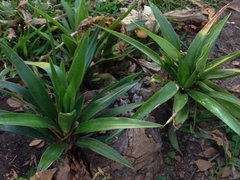
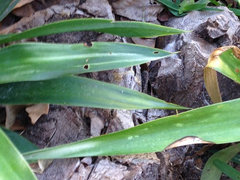
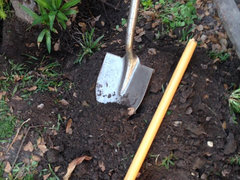
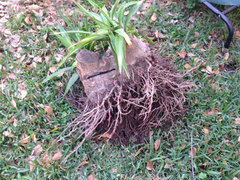
We didn't notice any thick roots coming off the 'trunk', just the stringy ones you see in last pick.
do these devil plants sprout back from those?
0- 7 years ago
This thread has been going for 17 years! Awesome!!
My husband has been repeatedly pouring on gasoline as soon as we saw a green shoot all of last summer. I dug around the yucca several times and discarded what I could find. I figured that the slimy mess was a good sign. By early fall it seemed to have worked. Spring should be coming soon, so we'll see!!!
0 - 7 years ago
Hello to those having a great time reading this thread.
I found this whilst doing some research before trying to attempt what sounds like an impossible task. I kind of liked the Yucca that came with the house we bought four years ago but it has grown to mammoth proportions and is threatening to take down the fence/our house so must be removed.
Before reading the thread I had already drawn up plans on what was going to go in its place but after having a good laugh here I think my plans for a meditation spot is not going to happen anytime soon (although I think I will need it).
The below picture is pre-removal and the tallest of those devils is probably 3-4m tall. Over the past few weeks I have removed about half of those suckers (limited bin space) but with a green waste collection I am attempting to finish off the job this weekend.
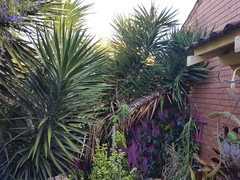
The root source is actually at the bottom left of the picture and there are more towers to the left :(
I remain hopeful of success but I may never be the same person again. If I don't post again, please avenge my death against these hateful wastes of space.
- 0
 7 years ago
it's not "my formula" - it's using a product as labeled and as intended!
that being said, Star of Bethlehem is probably in the same category as Smilax vines, of needing multiple applications over 2 or so seasons to completely eradicate them.
0- 7 years ago
Thought maybe you were onto something, but no I've done all this before. It will kill down the tops, but next season there they are again. I've been told that weed killers do not kill bulbs.
- 7 years ago
There are a couple that are more powerful than roundup; but they are dangerous because they can damage nearby plants just by being in the soil. Imazapyr and Pramitol. Probably should only be used by professionals.
If you only have a small area of bulbs, why not just cover them with black plastic and mulch for a few years. Surely THAT will kill them?
0 - 7 years ago
I have lost track of the years this has been going on, but at least 30 and maybe more. I'm now 83 and tired of it all. If I wasn't so old I'd move. If there was a market for these I'd be a billionaire. One year I covered a whole bed with plastic and let them cook. Killed everything but those SOB's. That was the summer we had 54 straight days of over 100 degrees. Thanks for trying to help.
0 - 0
- 7 years ago
Well, I think SOB's must have been here since the beginning of time, like cockroaches and coyotes.
 7 years ago
Yuccas LOVE and need sun. Remove Yucca and cover area with mulch or a tarp. When new shoots emerge from root fragments remove immediately so plant gets no sun. Roots will die quickly with no sun.
0 7 years ago
I had a huge yucca removed but there is a pile of sawdust left. Can I use it as mulch or will that mean more yuccas will grow?
0- 7 years agolast modified: 7 years ago
I live in Tacoma, Washington and since October 2016 to-date
(June 7, 2017), we have had over 47 inches of rain. Believe me, drowning yuccas
in water does not kill them at all, nor does the lack of sun. In fact, the 10 clusters of plants growing
in our small gravely yard are stronger and more prolific than ever... (grrrrrrrrrrrrr)0  7 years agolast modified: 7 years ago
I finally killed some yucca with relatively little effort: in March, just when they were starting to actively grow, I cut off all the green stuff, leaving a stump about 3 inches or so high. I then painted the cut side of the stump with UNDILUTED Roundup. I used a cotton ball to dab it on with.
Those suckers died immediately. And I was able to kick away the dried-up stump in about 6 weeks. I couldn't believe how easy it was.
- 5 years ago
I had/have a yucca clump that came with my house. 5 years ago, I used my long handled pruners to cut down all the foliage, then I dug a huge hole and removed all the roots I could find. I would imagine that I removed a couple of wheelbarrows of roots. I left the hole open for a month or two with no new shoots, so I filled the hole in with sifted dirt. I have planted nothing in it's place, and I check literally every day for shoots. I find a few every week, and use a trowel to dig them out as deep as the trowel will go. None have ever reached 3" in height, so depriving them of sunlight does not work. With the ground bare and weed & grass free, I never give the shoots a chance to attain any height.
When it cools down this fall I will be digging the hole out again, and will again sift for any pieces of root. What a nightmare.
- 5 years ago
I purchased my home over 2 years ago. At the time, I knew very little about yuccas,let alone how difficult it would be to remove. There were 4 yuccas growing along my fence line. They were huge! One of the trunks was at least 2 1/2 feet wide. Another had a branch that was nearly 15ft tall/long. I knew that I wanted them gone but I had no intentions on digging and cutting away at it. I read that few have had success with brushing on weed killer so I decide to try another method. I cut them all down until about 1-2 feet were left above ground level. I then drilled deep, 2-3 in wide holes in the different stems coming from the stump and drilled holes into the stump itself. After, I filled them with concentrated weed killer. Specifically weed killer high in glyphosate. The one I used was 41% glyphosate. As days and weeks passed, I saw leaves and sprouts on the stem and trunk turning brown and dying. Since then, the stumps have gotten soft and brown. I have not seen anything sprout since then. Not even from the ground. Since I am in no rush to use the space taken by the yuccas, I throw grass clippings and other compostable items on top of them. I assume they'll compost away sooner or later.
- 5 years agolast modified: 5 years ago
Yes, that will work...and less hazardous than various dunderheaded suggestions that get tossed around on these forums, like salt, bleach, or gasoline!!!
0  5 years ago
I will add my two cents after a four year battle with this demon plant.
There were many (plant) casualties along they way as I lost quiet a few as well as having to digup and relocate to lovely Japanese maples.
First what didn’t work- Every chemical I could get my hand on trying to poison the damn thing.
- Constant digging the roots out.
- Weed screens - Yukka just grows right through the best of them.
What finally worked. It wasn’t easy the house we bought four years ago had three big Yukkas in the main garden. I knew I was in trouble because when I would dig a foot down or more to the main roots they where huge and ripe, even after 6 months of no signs of growth the Yukka root looked like cutting a potato open white and juicy.
We ended the battle this spring, we literally had to dig up our whole garden. Around 3 and 1/2 feet down to were we hit concrete which thankfully the previous owner had lined the bottom of the garden with. We had dig up every inch of dirt and then had it removed, cleaned the area with bleach for about a month and then brought in fresh dirt. There gone finally and we couldnt be happier.
What I learned from the experience - never buy a house with them, unless you like the plant the amount of effort to remove is enough to land you in the looney bin.... Replace all the dirt, it could be the tiniest piece of Yukka you didn’t see that will regrow in a few months if you just dig out the root and then use the same dirt, remove every inch of dirt. 5 years ago
I hope everyone will try boiling water before applying poisons to their properties. If it did not work, I wouldn't propagate the suggestion.
- 5 years ago
Thank you everyone for this ongoing report about yucca. 3 years ago while at a grower's I noticed lovely yellow leaved yucca plants. I just had to have one and brought it home. I planted it in a large pot. It grew very nicely and this year it sent up several small shoots around the inner edge of pot. I had planned to transplant the babies into my garden. However, after reading this long post, I have been saved from this foolish plan. Thank you so much for all your nightmare experiences!
- 3 years ago
I actually finally got rid of my clump. I removed a quince at the same time. Both kept showing up for 6 years, but with diligence, and full strength round up for poison ivy concentrate, I haven't seen any shoots for 2 years. I had one quince shoot last year that was really small, that I got rid of, nothing since. Fingers crossed.
0  2 years ago
I can't stand the extremely painful, dangerous spikes but I've just found out this is a very valuable medicinal plant as well as a natural soap. My dear ancestors the native American Indians used it in many ways to helping skin inflammation, dry scalp/dandruff, food, cleaning/bathing agent which made their hair beautiful, tintures for medicine and tea etc... A very spikey plant indeed probably to keep animal predators away! It certainly keeps me away! Now that I know the value of using my plants I'll be safe around them and use pieces I can without causing harm. Once again any person that doesn't know BE EXTREMELY CAREFUL AROUND IT BECAUSE IT CAN CAUSE PERMANENT DAMAGE FROM THE DANGEROUS SHARP POINTS so please those of you that want to keep them transfer them to a safe out of the way place! U actually can take and peel away from bottom the dangerous spines towards the top until nobody can accidentally run into them by leaving the remaining like a crown/canopy at the top and this is a beautiful way to prune them ! I've done it several times and they look very much like a palm tree!
0- 2 years ago
Not just the damage the pokeys will do but the saponins that basically is the main soap/ medicine in the yucca can harm if not properly dealt with and/or allergic.
0 - 2 years ago
I have the same problem. Only I thought I got rid of it all after 2 years of digging and killing. I planted bare root peony plants in the space. Unfortunately, the yucca shoots have appeared again this spring. I don't want to damage the peony plants. Do you think the "paint on" method using straight herbicide on the yucca plant leaves be safe enough for the peonies?
0






davidrt28 (zone 7)