My builder uses Houzz Pro to plan the timeline and give detailed estimates and daily updates with photos of progress, and provide invoices at pre-agreed key points in the build. This made the whole experience much more efficient and stress-free.
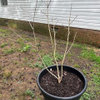
Can someone please tell me when this camelia is suppose to bloom? It's had nice big fat buds on it all winter but they don't seem to want to open. I am in the Fraser Valley, BC zone 8b. Thank you.
The places I checked just said mid-winter. The only one tyhat quoted a month said February thru March. But note that large temperature swings can cause it to bloom later (or earlier) than in other years. If the temps drop too much or too fast, you could also see some of the buds dry out and-or drop.
Thank you again for helping me Luis. I guess I can only hope she blooms. We're suppose to get some pretty cold weather next week, so I think I'll put some burlap around it. Thanks Luis.
Hey Luis, guess what? My Lily Pons survived the winter and several blooms just beginning to open. I'm pretty excited but wanted to take the time today to say 'thank you' for all your help. Should I be doing anything special to them now? Fertilize or keeping them watered? How do camellias like their soil, moist?
Congratulations! Post some pictures now and then. I too am enjoying a delayed bloomage season but most of my plants are about to open their last unopened bloom. Enjoy your blooming season and take pictures so you remember when they opened in future years.
As for watering, they prefer evenly moist soil, meaning no periods of dry then wet then dry so do as best as you can to make the soil stay evenly moist.
Adding 3-4" of acidic mulch thru the drip line lengthens the number of days between waterngs.
I "test" the soil using the finger method: insert a finger to a depth of 4" and water it (about 1 gallon) if the soil feels dry or almost dry. Make this test daily in the mornings for 2-3 weeks. You can write a note in a wall calendar every time that you water. After 2-3 weeks, review the information on the calendar and calculate on average the frequency of waterings. Then set the sprinkler to water 1 gallon on that same frequency (every 4, 5, etc days for example). If the temps go up/down 10-15 degrees and stay there, use the finger method again to see if you need to tweak things.
As far as fertilizing, now is the time to start. Generally, an application sometime during the first part of March, followed by a second application during the first part of May, and a final third application during the first part of July should work in our hot zones. You can use 1/2 cup to 1 cup of composted manure, cottonseed meal or a general purtpose slow-release fertilizer like Osmocote's 10-10-10 fertilizer.
If your soil is not naturally acidic, amend it in Spring and again of needed (if you notice the leaves showing signs if iron chlorosis). You can amend using garden Sulphur, green sand, iron sulfate or liquid iron-chelated compounds.
Luis, here is a pic of my Camelia flower. I am really happy it opened up for me, I was beginning to think it never would. lol ~ Thank you for your help and encouragement. I printed your instructions and will keep them close at hand. I gave them some fertilizer the second week of March. The fertilizer I gave them was for Rhododendrons, Azaleas and Camelias. Once they all bloom out, I'll take another photo. The leaves aren't as dark green as I had hoped but I will work on this.
luis_pr
UserOriginal Author
Related Professionals
Morgantown Landscape Architects & Landscape Designers · Manchester Landscape Architects & Landscape Designers · Burlington Landscape Architects & Landscape Designers · Cumberland Landscape Contractors · Philadelphia Landscape Contractors · Plymouth Landscape Contractors · Hudson Landscape Contractors · Flagstaff Landscape Contractors · Kalispell Landscape Contractors · Wilmington Carpenters · Covington Carpenters · Chicago Carpenters · Gloucester Carpenters · Scranton Carpenters · Eugene CarpentersUserOriginal Author
luis_pr
UserOriginal Author